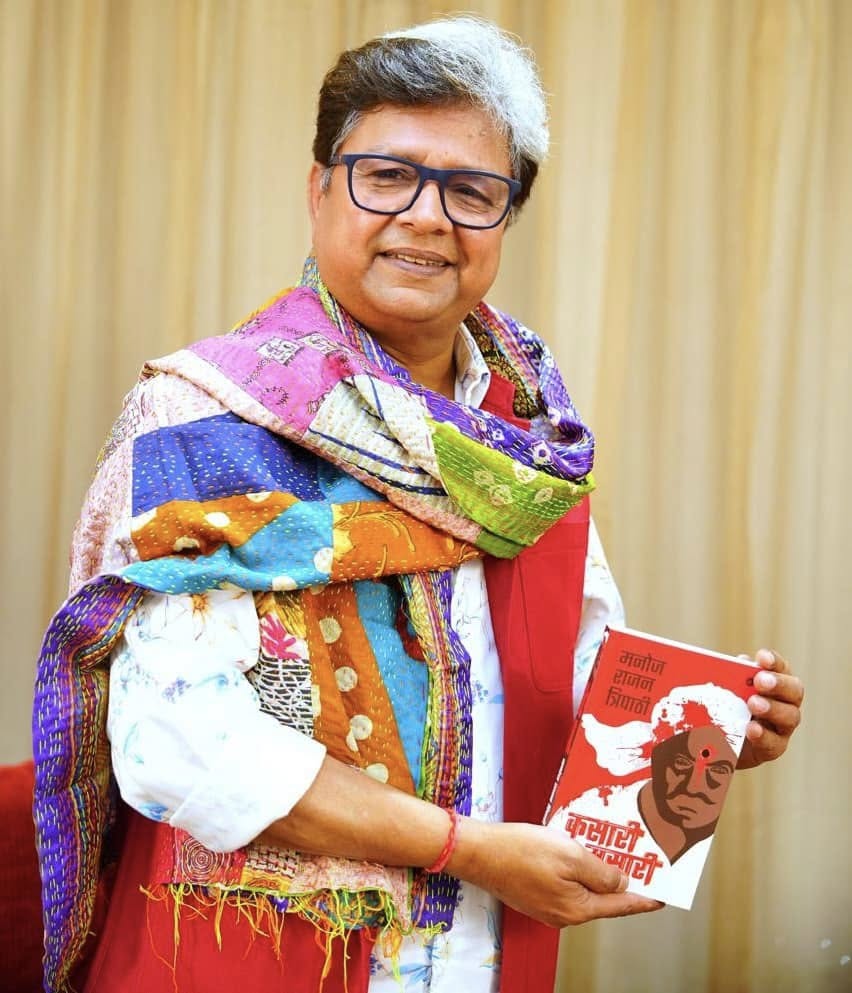
Lucknow: Metaphor LitFest’s Lawn session titled “Crime Ka Paatal Lok” offered a riveting exploration of organised crime in India, featuring renowned crime writer and filmmaker Manoj Rajan Tripathi in conversation with journalist Zeenat Siddiqui. Tripathi, known for his work on films such as Mulk and Atithi Tum Kab Jaoge, shared decades of investigative insight into the dark corridors of India’s criminal underworld.
Tripathi recounted how a story he was covering shifted from Banaras to Kashmir, only to be overshadowed by the live televised murder of politician Atiq Ahmed. He detailed the chilling execution: killers disguised as journalists, trained using footage of Ahmad Shah Massoud’s assassination, and armed with foreign weapons worth nearly ₹9.5 lakh, despite having minimal resources themselves.
Tracing Atiq Ahmed’s rise, Tripathi highlighted the brutality that marked his journey—from the land mafia and coal businesses to politically protected murders. He cited gruesome incidents, including the killing of Ashok by throwing him onto railway tracks and delivering his remains in a sweets box to his mother, the use of rape to control madrasa property for real estate interests, and the elimination of rivals such as Chand Baba. Tripathi explained that these acts exemplified the combination of terror, impunity, and ambition that defined Atiq’s criminal empire.
The discussion also revealed the deep nexus between crime and politics. Tripathi remarked, “Agar mafia ek biwi hai, toh politics uska shauhar, aur unka bachcha vahshat hota hai,” underscoring the symbiotic and violent relationship between political power and organized crime. He highlighted Atiq’s shifting political loyalties and his eventual transfer to Sabarmati Jail due to threats against his life.

Expanding the scope to national crime dynamics, Tripathi discussed the Lawrence Bishnoi–Goldy Brar network responsible for Sidhu Moosewala’s killing, the murder of Tillu Tajpuriya inside Tihar Jail, the daylight courtroom assassination of Jitender by assailants disguised as lawyers, the killing of Muqeem Kala inside prison, and the court execution of Sanjeeva Maheshwari. These examples illustrated how violence now penetrates even the most protected environments.
Tripathi also examined forensic irregularities in past cases, such as mismatched bullets and multiple pistols in the murder of gangster Munna, revealing how narratives are manipulated and truth is obscured under layers of fear and power. Through his vivid storytelling and incisive analysis, the session offered attendees a rare glimpse into India’s intricate underworld — a real-life paatal lok where crime, politics, and policing intertwine in complex and often terrifying ways.